

Noticias
Best Insecticide for Date Palms: Preventive and Curative Application Methods

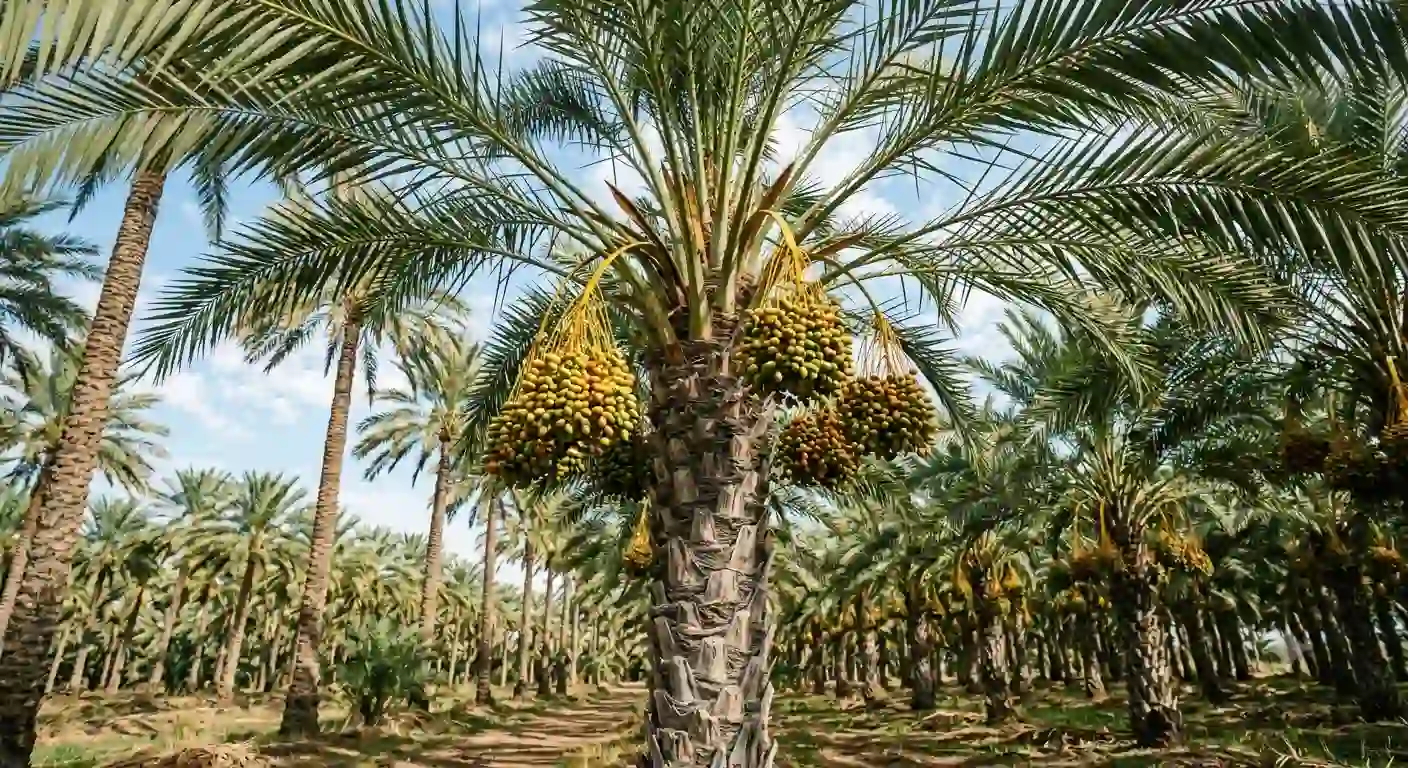
In the vast expanses of date palm plantations, there is a hidden enemy invisible in its early stages to the naked eye. It burrows inside the trunk, silently devouring living tissue, and its damage only becomes visible when the destruction has already spread deep. This enemy is the Red Palm Weevil (Rhynchophorus ferrugineus) an insect originating from Southeast Asia that has swept across the Arab world and now threatens one of our most economically and culturally irreplaceable agricultural symbols.
At Al-Qawafel, we understand that protecting date palms is not simply a matter of applying a chemical treatment, it is a comprehensive approach that combines deep understanding of pest behavior, choosing the best insecticide for date palms, and applying it at exactly the right time in exactly the right way. This guide is the distilled product of more than 35 years of date palm pest management experience, placed directly in your hands.
Classification of Date Palm Insecticides by Target and Mode of Action
When discussing the best insecticide for date palms, the first step is understanding that every pest and every type of infestation requires its own specific solution. Think of it as entering a battle where each enemy requires a different weapon. Here are the main insecticide categories used in date palm protection.
Systemic Insecticides Trunk Injection for Weevil Control
Systemic insecticides are the most effective weapon against the Red Palm Weevil, particularly when the infestation has already penetrated deep into the trunk. These insecticides are distinguished by their ability to travel through the palm’s vascular tissue, reaching the pest wherever it is hiding.
Injected directly into the trunk, the active ingredient travels with the palm’s sap and reaches larvae hidden inside their internal tunnels. Effectiveness does not depend on direct contact with the insect, instead, the larva is killed when it feeds on the palm tissue saturated with the insecticide, ensuring elimination across multiple life stages.
Key examples from this group include neonicotinoid compounds such as imidacloprid and thiamethoxam.
Contact Insecticides External Spraying and Frond Base Treatment
Contact insecticides form the first line of defense in both preventive and surface-level curative management programs. They work through direct physical contact with the pest and are primarily used to treat wounds left after pruning, or to coat trunk bases to prevent egg-laying by adult weevils.
Contact insecticides kill the insect immediately upon contact with the active ingredient. They are fast-acting against adult insects and surface-dwelling larvae but they do not penetrate internal tissue, which means re-application is required after every pruning or frond removal operation.
Key examples include chlorpyrifos and fipronil among the most widely used compounds in preventive palm management programs.
Aluminum Phosphide Tablets (Fumigants) Sealing and Gassing Closed Cavities
In advanced infestation cases where internal cavities have expanded significantly, fumigation tablets are a powerful option but one that demands high expertise and extreme caution due to the toxicity of the gas produced. The tablets are placed inside sealed cavities and tightly closed. They react with atmospheric moisture to release phosphine gas, which penetrates every corner of the cavity and eliminates the pest across all life stages.
Critical warning: The use of fumigation tablets is dangerous and must be carried out under the direct supervision of a qualified agricultural engineer or certified pest control specialist. This method is not recommended for untrained farmers.
Best Active Ingredients for Eliminating the Main Date Palm Pests
Choosing the best insecticide for date palms means choosing the right active ingredient for the target pest. Each compound has its own chemical structure and mode of action.
Imidacloprid Primary Control for Red Palm Weevil
Imidacloprid is the most widely used and globally recommended active ingredient for Red Palm Weevil control. This systemic neonicotinoid insecticide is distinguished by its exceptional ability to travel through palm tissue. It kills larvae and adult insects by disrupting and paralyzing the nervous system, and is typically used in trunk injections or preventive trunk sprays at a concentration of 10 ml per liter of water.
Chlorpyrifos Eliminating Stem Borers and Tunnel Pests
This organophosphate insecticide is a double-edged sword fast-acting against adult insects and surface borers, but requiring careful application technique. It works by both contact and ingestion, and is primarily used for frond base washing or wound dusting after pruning to prevent adult entry and egg-laying.
Al-Qawafel tip: Use chlorpyrifos at a concentration of 15 ml per liter of water for preventive trunk coating applications, and repeat every two months or after every pruning operation.
Abamectin, Treatment for Mite and Acari Infestations
When dealing with microscopic pests such as red spider mites that attack date palm leaves and fruit clusters, abamectin is the optimal solution. This naturally-derived biological insecticide works by contact and has a translaminar effect, meaning it penetrates leaf tissue and reaches mites feeding on the underside of leaves.
Abamectin is regularly used in integrated pest management programs to eliminate spider mites and the dust mite infestations that cause fruit deformation and suppress vegetative growth.
Annual Date Palm Spraying Schedule Strategic Application Timing
The timing of applying the best insecticide for date palms is just as critical as choosing the right active ingredient. Palm nutritional and protective needs change with each season, and a well-structured annual spraying calendar is what separates a protected plantation from a vulnerable one.
Post-Pruning and Winter Frond Removal Spray
Objective: Protect freshly created wounds from adult weevil entry and egg-laying.
Optimal timing: Immediately after completing winter frond removal and dead leaf pruning operations.
Method: Coat trunk bases and wound surfaces with contact insecticides such as chlorpyrifos or fipronil; dust all fresh wounds with appropriate insecticidal powder immediately after cutting.
Post-Fruit Set Spray Protecting Fruit Clusters
Optimal timing: Early summer, following fruit set.
Objective: Protect fruit clusters from date moth larvae attacks and scale insect infestations.
Method: Concentrated foliar spray targeting the fruit clusters and fronds, using fruit-safe insecticides always respecting the pre-harvest interval (PHI) printed on the product label.
Post-Harvest Spray After Date Collection and Crown Cleaning
Optimal timing: Immediately following the end of the harvest season.
Objective: Disinfect wounds left by fruit cutting and clean the crown area before winter.
Method: Coat the top of the palm and frond bases with a preventive insecticide to stop insect congregation before the winter season begins.
Protocol for Treating an Infested Palm and Preventing Spread
When infestation is detected in your plantation, speed of response can save the entire farm. Here is the step-by-step protocol for managing an infested palm using the best available insecticides.
Trunk Injection Using a Drill and Sealing Holes with Putty
This is the most effective method for localized treatment of recent and moderate infestations.
Step-by-step procedure:
- Locate the infestation: Look for active entry holes or areas where sticky sap is oozing from the trunk surface.
- Drill injection holes: Use an electric drill to create holes of 10–12 mm diameter around the infested area. Position holes approximately 20 cm above the infestation zone larvae tend to move upward inside the palm trunk.
- Inject the insecticide: Inject the solution (imidacloprid at 10 ml/liter) directly into the holes, or fix small tubes in the holes and pour the solution through them to ensure it reaches deep into the tissue.
- Seal all holes: Close every hole tightly using agricultural putty, paraffin wax, or clay mixed with insecticide to prevent larvae from escaping and to stop secondary pest entry.
Immersion of the Palm Crown (Heart) in Offshoots and Young Palms
Young offshoots and newly transplanted palms are the most vulnerable to infestation because their tissue is soft and easy to penetrate.
Safe protocol for young palms:
Before planting the offshoot, fully immerse the palm crown (heart) in a systemic insecticide solution such as fipronil at a rate of 1 — 1.5 liters per 1,000 liters of water for 30 minutes.
Plant the treated offshoot within 72 hours of treatment to ensure maximum protection efficiency.
Wound Dusting to Prevent Adult Attraction and Egg-Laying
Adult weevils, particularly females, are strongly attracted to the scent of sap oozing from pruning wounds or offshoot removal sites. These wounds are their preferred egg-laying sites.
Golden prevention procedure:
- Dust all wounds immediately after every pruning operation with contact insecticidal powder (wettable powder formulation) to repel adults and prevent egg-laying
- Apply a coating of chlorpyrifos 48% or fipronil 5% solution to the trunk base up to a height of 50 cm, repeated every two months on a regular schedule
For a complete overview of agricultural insecticide types, chemical groups, and how to rotate them to prevent resistance, see: Types of Agricultural Insecticides
Frequently Asked Questions
Is there a definitive cure for Red Palm Weevil after severe internal hollowing?
In cases of severe hollowing and significant structural damage to the trunk, treatment becomes very difficult and cannot guarantee the palm’s survival. The recommended course of action is immediate removal and burning of the infested palm to prevent spread to neighboring trees. In cases of minor hollowing, aggressive and repeated trunk injection with systemic insecticides combined with strengthening the palm through irrigation and fertilization to support tissue regeneration can be effective.
Can an insecticide and a fungicide be mixed in a single palm spray?
Random mixing without technical consultation is not recommended. Some insecticides interact chemically with fungicides, reducing the effectiveness of both or causing damage to the palm. Always verify product compatibility by reading the label carefully, and test any new mixture on a single palm before applying across the entire plantation.
What is the best natural insecticide for date palm spider mites?
Biological insecticides derived from naturally occurring bacteria such as abamectin and spinosad are excellent and relatively environmentally safe options, particularly for use in the early stages of mite infestation. They are also safer for beneficial insects when applied at the recommended timing.
Protecting your palm trees is not a luxury; it is a duty and an investment in a prosperous agricultural future. Choosing the best insecticide for palm trees begins with a deep understanding of the pest, moves through identifying the appropriate active ingredient, and culminates in correct application at the strategic time. Always remember that integrated control programs, combining prevention and treatment, alongside rotating between different chemical groups are the optimal solution to ensure crop success and minimize pest resistance.
At Al Qawafel Agricultural & Industrial Co., we put our extensive experience and in-depth knowledge of palm pests at your fingertips. We provide high-quality products and free consultations to help you protect your farm and achieve maximum productivity because your success is our success.
Learn more about our integrated agricultural services by visiting our website: https://alqawafel.com/ar/
 English
  العربية
  Español
  Français
  简体中文
简体中文  Português
  Português do Brasil
  Русский
  Deutsch
  Türkçe