

News & Stories
Best Soil Types for Farming: A Productivity-Based Comparison

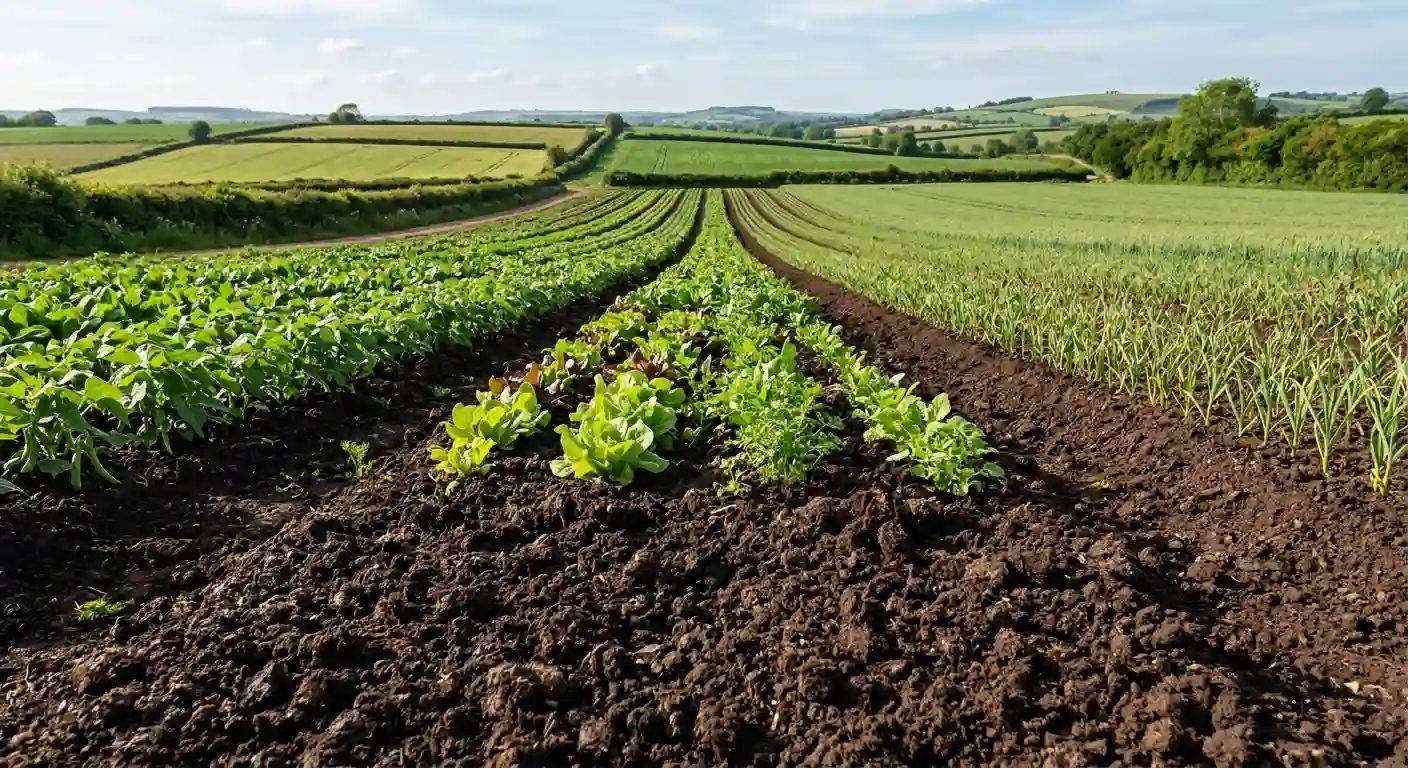
Have you ever wondered why your neighbor’s field produces a bumper harvest while your land, which looks just the same, doesn’t deliver the same results? The secret often has nothing to do with seeds or fertilizer alone it lies in choosing the best soil types for farming. Soil isn’t just a container for a plant; it’s a complete living system that governs root nutrition, aeration, and water supply.
At Al Qawafel Agricultural Industries, we know that understanding your soil is the true starting point of successful farming. That’s why we put together this guide to give you everything you need to know about the best soil types for farming, how to analyze them, how to choose the right one for your crops, and the ideal mixing formulas that can noticeably boost your yield.
The Physical and Chemical Properties That Define Soil Quality
To choose the best soil for farming, you first need to understand its physical and chemical properties the gold-standard criteria that separate productive soil from barren ground.
Texture, Permeability, and Drainage
When you pick up a handful of soil, what you’re feeling is its texture the percentage of sand, silt, and clay particles it contains. This texture is the single most important factor in determining the best types of agricultural soil, because it controls how water and air move through the ground. Soil is made up of:
- Sand: Large particles that leave wide gaps, so water drains through quickly (high permeability), but it doesn’t hold onto water or nutrients. Sandy soil is light and warms up fast, but it’s poor and dries out quickly.
- Clay: Very fine, tightly packed particles, so water struggles to pass through (low permeability). Clay soil is heavy and rich in nutrients, but it can suffocate roots if watering isn’t managed carefully.
- Silt: Medium-sized particles with a silky texture fertile, but prone to compaction.
- Loam: The magic, balanced blend of sand, silt, and clay. It combines good drainage with strong moisture and nutrient retention, making it one of the best soil types for farming overall.
Here’s a quick comparison:
| Soil Type | Drainage | Water Retention | Fertility | Aeration | Best Suited For |
| Loam | Excellent | Good | High | Excellent | Most crops |
| Clay | Poor | Excellent | High | Poor | Wheat, rice |
| Sandy | Excellent | Poor | Low | Excellent | Root crops |
Measuring pH and Salinity (EC)
Once you understand texture, the next step is soil chemistry. Two key numbers determine soil health:
pH level: A measure of how acidic or alkaline the soil is, on a scale from 0 to 14. A reading of 7 is neutral; lower numbers mean acidity, higher numbers mean alkalinity. The magic range for ideal soil is between 5.5 and 7.5, since most nutrients are available for absorption within this window. If soil is too alkaline (as is common in our desert lands), plants suffer from iron and zinc deficiency. If it’s too acidic, toxic elements can build up.
Salinity (EC): A measure of salt concentration in the soil. High salinity effectively means the plant is thirsty, because excess salts block roots from absorbing water causing wilting even when water is present. Low-salinity soil is considered the best soil for farming, since it ensures optimal water and nutrient uptake. This is closely tied to broader soil salinity issues that many farms face understanding the causes of soil salinity is often the first step toward fixing it.
Classifying Agricultural Soil Types From a Productivity Perspective
Now that you understand the criteria, let’s put them into practice. These are the main soil types you’ll encounter on your farm, and how to work with each one.
Clay Soil
Think of clay soil like a thick sponge. It’s made up of extremely fine particles that hold onto water and nutrients tightly, making it very rich and well-suited to dry regions or moisture-loving crops.
Drawbacks:
- Poor drainage it becomes sticky and waterlogged in winter, then hardens and cracks in summer.
- Requires patience and irrigation skill, since roots can become starved of oxygen.
Al Qawafel tip: To improve clay soil, add generous amounts of organic matter (compost) and sand to break it up and improve aeration. Once improved, it’s well suited to field crops like wheat and rice. If salinity is also an issue in clay soils, fertilizers that treat soil salinity can help restore balance.
Sandy Soil
Made up of large, coarse particles, sandy soil drains excellently, doesn’t cause root rot, and warms up quickly allowing for early spring planting.
Drawbacks:
- Very poor in nutrients, since water washes nutrients away quickly (low nutrient retention).
- Dries out fast and needs frequent irrigation.
Al Qawafel tip: Sandy soil isn’t the best soil for farming on its own, but it’s excellent for root crops (carrots, potatoes) once amended with generous amounts of compost and peat moss to boost its water-holding capacity.
Loam Soil: The Expert’s First Choice
Loam soil is the ideal blend of sand, silt, and clay in close proportions. It suits most crops, from vegetables to fruit, and makes farm management far easier.
Key advantages:
- Combines all the positives: excellent drainage, good water and nutrient retention, and ideal root aeration.
- Widely considered one of the best soil types for farming overall.
Best Ready-Made and Imported Agricultural Soil Types
Sometimes you need ready-made soil to start your project, especially for protected or home cultivation. These are the go-to materials to make up for a lack of natural soil.
Peat Moss
An organic material formed from the decomposition of sphagnum moss in bogs, with an exceptional capacity to hold water while providing excellent aeration, plus it lightens soil overall.
Uses:
- Ideal for improving sandy soil (to help it retain water) and clay soil (to lighten its heaviness).
- Preferred for home gardening and potting mixes.
Coco Peat
Processed coconut husk fibers, considered an eco-friendly alternative. Excellent in hydroponic mixes and for improving sandy soil in desert land.
Benefits:
- High water retention with good aeration.
- Near-neutral pH.
- Lasts longer and doesn’t break down quickly.
Perlite: The White Aeration Beads
A natural volcanic glass heated to a high temperature until it expands like popcorn. Those lightweight white beads are the key to aeration. It’s added to peat moss and coco peat mixes to prevent compaction, and it’s ideal for farms dealing with overwatering.
Benefits:
- Significantly improves aeration and drainage.
- Doesn’t retain water itself, but creates air pockets for roots.
Ideal Soil Mixes by Growing Environment
There’s no single soil that suits everything. The real secret lies in the mix. Here are Al Qawafel’s exclusive formulas.
Home and Indoor Potting Mix
For houseplants and potted plants, you need light, well-draining soil that’s rich in organic matter, since it stays in an enclosed container. The ideal mix:
- 1 part peat moss
- 1 part compost (well-decomposed organic fertilizer)
- 1 part perlite
Peat moss retains water, compost feeds the plant slowly, and perlite prevents soil compaction and root rot.
Greenhouse and Open-Field Crop Mix
In greenhouses and open fields, you need soil with high productivity and good controllability. The ideal mix:
- 1 part clay soil (native, from the farm)
- 1 part compost or peat moss
- 1 part coco peat
Clay soil provides the base and nutrient retention, compost enriches it, and coco peat improves water retention and aeration creating the best soil for intensive farming. For an added yield boost, pairing the right soil mix with fertilizers that increase crop yield can make a real difference.
Formula for Improving Sandy Soil in Desert Land
Sandy land is the biggest challenge in our region, but with effort it can become productive. To make the ideal mix:
- Add large amounts of compost (roughly 2-3 cubic meters per donum) annually.
- Mix it with coco peat and peat moss.
- Use agricultural gypsum to reduce salinity.
- Use agricultural sulfur to lower alkalinity (pH) if needed.
If salinity remains a persistent challenge even after amendment, it’s worth reviewing treatments specifically formulated to address soil salinity.
Frequently Asked Questions
Which soil type retains water and nutrients best? Clay soil has the highest capacity to retain water and nutrients, thanks to its tiny particle size and large surface area, which allows it to absorb water and minerals strongly. However, it must be managed carefully to avoid waterlogging the roots it needs improved aeration and added organic matter.
How do you make a fertile, balanced agricultural soil mix yourself? To make the best soil for farming yourself, mix three equal parts: clay or sandy soil (whichever is available), compost or well-decomposed manure, and perlite or coarse sand to improve aeration. This simple recipe creates an ideal environment for growing most crops.
What’s the best ready-made agricultural soil available on the market? The best ready-made types contain a well-calculated blend of peat moss and perlite. Look for soil labeled as a multi-purpose growing mix, and make sure it’s sterilized and free of pathogens for the best results.
Choosing the best soil types for farming is an investment in your farm’s future. Don’t think of soil as just dirt think of it as a living organism that needs understanding and care. By following this guide from analyzing texture and pH, to understanding different soil types and their ideal mixes you can turn any land into a fertile environment that delivers an abundant, successful harvest.
At Al Qawafel, we offer not just high-quality products, but also over 35 years of experience to help you build your farm on solid, fertile ground. Because your success is our success. Discover our full range of agricultural services by visiting alqawafel.com, and for technical inquiries about soil analysis, reach out to our specialized technical team.
 English
  العربية
  Español
  Français
  简体中文
简体中文  Português
  Português do Brasil
  Русский
  Deutsch
  Türkçe