

News & Stories
Best Fertilizer for Accelerating Plant Growth and the Chemical Ratios Behind It

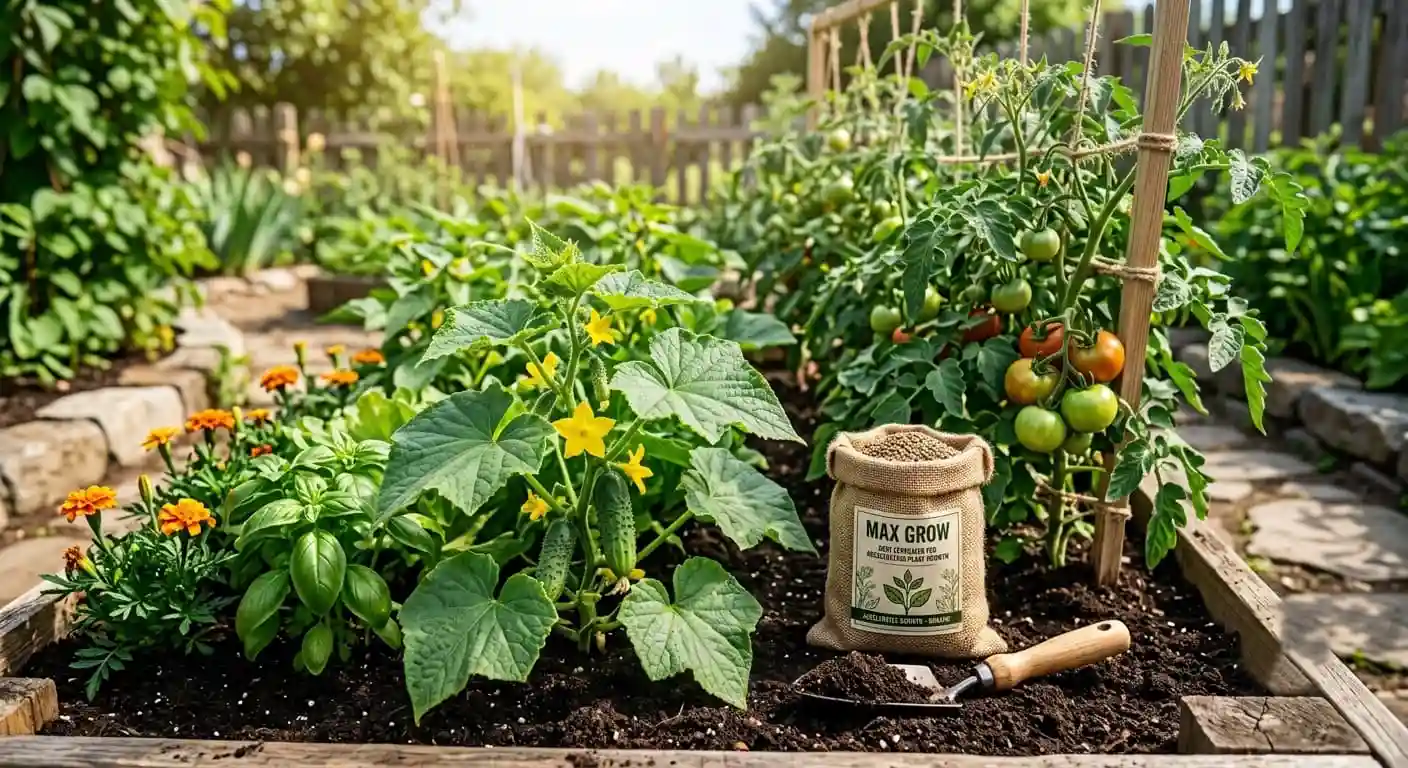
Imagine planting two identical seeds on the same day, in the same soil, under the same sun. A month later, one has become a strong, lush green seedling, while the other has barely broken through the soil surface. What made the difference? The seeds weren’t different, and the water was the same but the best fertilizer for accelerating plant growth is what completely changes the rules of the game. A plant isn’t a passive organism; it’s a precise biochemical factory that decides when to grow and when to flower based on the signals it receives from you. And the grower isn’t just someone who delivers water and food they’re the engineer of those signals.
This guide draws on the expertise of Al Qawafel Agricultural Industries, built over more than 35 years in fertilizer, pesticide, and seed manufacturing. With a presence in more than 40 countries worldwide, Al Qawafel understands that choosing the right fertilizer isn’t just a purchase decision it’s an investment in your crop’s future.
Classifying Growth-Accelerating Fertilizers by Physiological Goal
Not every fertilizer produces equal growth. The secret to accelerating plant growth isn’t just about adding fertilizer it’s about understanding the physiological goal you’re aiming for. Do you want large, green leaves as fast as possible? Strong roots pushing into the soil? Fruit that ripens ahead of schedule? Each goal calls for a different key among the NPK elements, and this is where the real game of smart fertilization lies.
High-Nitrogen (High-N) Fertilizers for Faster Foliage and Leaf Growth
Nitrogen is, without question, the engine of vegetative growth. If you’ve seen a neighbor’s plants turn lush green and seem to grow before your eyes, nitrogen is usually the secret. This element is a building block of proteins and chlorophyll, meaning bigger leaves, taller stems, and an overall healthier, more vigorous plant.
Warning: Fast-release nitrogen can burn plants, so it’s best to choose formulas that combine nitrate and ammonium forms for balanced growth without the risk.
High-Phosphorus (High-P) Fertilizers for Root Activation and Energy Flow
This element is essential to photosynthesis and energy transport within the plant. Phosphorus-rich fertilizers, such as a 10-52-10 formula, are the ideal choice when transplanting seedlings or dealing with cold soil that slows root growth. Choose soluble sources like monoammonium phosphate to ensure fast, effective absorption.
High-Potassium (High-K) Fertilizers for Faster Fruit Ripening and Stronger Immunity
You might not see potassium push a plant taller the way nitrogen does, but it ensures fruit quality, strengthens cell walls, and boosts the plant’s resistance to stress and drought. During flowering and fruit-set, potassium becomes the real hero. High potassium levels may not dramatically raise yield in some studies, but they noticeably improve plant health and the quality of the final product a factor worth weighing alongside any approach aimed at increasing overall crop yield.
The Best Commercial NPK Formulas for Fast Growth, and What Their Numbers Mean
To identify the best fertilizer for accelerating plant growth, you need to be able to read NPK numbers, since they’re your compass in the world of fertilization. Each number represents a percentage by weight, and understanding them saves you years of failed trial and error. For a broader look at how these formulas are categorized, see this overview of the different types of chemical fertilizers.
The 40-0-5 Formula
This formula is a rocket for vegetative growth. It contains a huge proportion of nitrogen (40%) with very little potassium, and it’s specifically designed to push plants to produce massive amounts of green foliage in the shortest possible time. It’s typically used on lawns and green spaces that need a quick revival, but it must be used with great caution to avoid burning plants, especially with fast-release nitrogen sources.
Warning: This formula isn’t suitable for flowering or fruiting plants during the bloom stage, since excess nitrogen delays flowering.
The 20-20-20 Formula
This is the most famous balanced formula, at a 1-1-1 ratio. It’s an excellent choice for general feeding across different growth stages, especially for houseplants and seedlings. It provides an equal base of all three elements, making it safe and suitable for routine use without needing a detailed soil analysis.
The 20-20-20 formula is one of the most widely used blends Al Qawafel offers within its broad range of balanced fertilizers suited to different growth stages, manufactured to ISO-certified quality standards.
The 10-52-10 Formula
If your goal is roots, this formula is your magic key. Its high phosphorus content (52%) makes it the top choice when planting seedlings or when you need to establish strong roots in poor soil. It isn’t for vegetative growth it’s for building the foundation the plant will rely on for the rest of its life.
Biostimulants and Fast-Absorbing Natural Fertilizers
The world is moving toward sustainable agriculture, and natural fertilizers are no longer just poor substitutes they’ve become smart solutions that strengthen both soil and plant together.
Heat-Treated Animal-Based Organic Fertilizers
Recent research shows that processed organic fertilizers such as those derived from shrimp waste and potato peels can outperform conventional chemical fertilizers in boosting plant growth, weight, and height. Heat treatment and granulation make these materials more concentrated and easier to use, providing a gradual release of nutrients that feeds the plant over longer periods without the risk of burning.
Fortified Yeast Solution
Yeast isn’t just for baking it’s considered one of the best fertilizers for accelerating plant growth, since it contains vitamins, minerals, and natural growth factors that stimulate cell division and root growth. A yeast solution is easy to prepare and can be added to the soil or sprayed on the leaves as a natural, fast-absorbing biostimulant a technique that fits well within the broader category of foliar fertilizer applications.
Amino Acids and Chelated Micronutrients
Amino acids are the basic building blocks of protein, and applying them directly to a plant reduces the effort it would otherwise spend synthesizing them itself, redirecting its energy toward growth and flowering. When combined with chelated micronutrients (such as iron and zinc), these elements become instantly available for absorption, solving yellowing and stunted growth issues in alkaline or poor soil.
Criteria for Choosing Fertilizer Based on Plant Type and Growing Location
Not every plant asks for the same food. Choosing the right fertilizer requires understanding the plant’s nature and its environment which starts with understanding the soil type it’s growing in.
Fertilizers for Indoor Houseplants
Indoor plants live in a confined space, so they need balanced fertilizers (such as 20-20-20) at low concentrations but applied more frequently. Fast-absorbing liquid fertilizers are best, since they don’t leave salts that build up in the soil and burn sensitive roots.
Fertilizers for Fruit Trees and Field Crops
Here, things get more specialized. Fruit trees need phosphorus and potassium during flowering and fruit-set, and less nitrogen to avoid vegetative growth at the expense of fruit a balance covered in more depth in guides on choosing the best fertilizer for tree growth and fertilizer that helps trees achieve strong growth. Field crops like wheat respond very well to granulated organo-mineral fertilizers that combine slow release with immediate feeding, and these have been shown to achieve yields comparable to chemical fertilizers while improving soil health.
The Safe Fertilization Protocol
Fertilization is an art before it’s a science. Overdoing it can destroy your crop in a matter of moments.
Calculating the Precise Dose
Read the label carefully, since the element’s percentage determines how much product you actually need. For example, to apply 1 kg of nitrogen, you’d need 5 kg of a 20-20-20 fertilizer. This simple calculation protects you from over-fertilizing. Always start with lower rates than recommended when testing, then increase gradually.
The Ideal Timing for Fertilizing, and Its Relationship to Soil Moisture and Irrigation Cycles
The best time to fertilize is when the soil is moist, since roots absorb nutrients better in the presence of water. Avoid fertilizing on extremely hot days, and prefer early morning or evening. Split the total dose across several applications (split fertilization) to ensure continuous absorption and reduce losses especially in fast-draining sandy soil, where salinity issues from fertilizer runoff can also emerge; see common causes of soil salinity for more detail.
Al Qawafel keeps these scientific standards at the heart of everything it produces, relying on the latest technologies in manufacturing while maintaining strict quality and environmental safety standards making its fertilizers a safe, effective choice for growers seeking a more abundant harvest.
Frequently Asked Questions
How do I make trees grow taller and faster as quickly as possible? The secret lies in combining high nitrogen (to drive vegetative growth) with phosphorus to strengthen the roots that will support that rapid growth. Make sure to provide steady doses of a balanced fertilizer like 20-20-20 while gradually increasing nitrogen concentration, and use biostimulants like amino acids to boost nutrient absorption.
Is it okay to mix chemical and organic fertilizers at the same time? Yes, and it’s actually considered good practice organic fertilizers improve soil structure and its ability to hold water, while chemical fertilizers provide an immediate growth boost. Mix them, but in balance, and avoid combining acidic chemical products with alkaline organic ones in the same tank without testing first.
What are the signs of over-fertilizing on plant leaves? Signs of over-fertilizing show up as burned, dry brown patches on leaf tips and edges, yellowing of lower leaves despite adequate moisture, sudden wilting that makes the plant look thirsty even though it’s been watered (because salts block root water absorption), and a white salty crust forming on the soil surface. If you notice these signs, stop fertilizing immediately and flush the soil with plenty of water to dissolve excess salts while ensuring good drainage and if the problem persists, it’s worth checking for underlying soil salinity issues.
Where can I get high-quality Al Qawafel fertilizers? Al Qawafel Agricultural Industries’ products are available in local markets across more than 40 countries worldwide. You can reach out to the specialized sales team for technical guidance on the right product for your crop and growing environment. Visit Al Qawafel’s website at alqawafel.com or contact your local sales representatives.
In the end, the best fertilizer for accelerating plant growth is the one you choose after understanding what your plant actually needs before you even open the bag. Overfeeding isn’t generosity; it’s harm that burns roots and destroys soil. Real growth isn’t a race against time it’s the art of balance: between nitrogen and phosphorus, between chemical and organic, between dose and timing. Always ask yourself: what stage is my plant at right now? Because every stage has its own key. Plant with awareness, fertilize with intelligence, and remember that a plant speaks the language of yellowing leaves and delayed fruit be the one who knows how to listen, and you’ll harvest before you expect to.
 English
  العربية
  Español
  Français
  简体中文
简体中文  Português
  Português do Brasil
  Русский
  Deutsch
  Türkçe