

News & Stories
What are the Types of Foliar Fertilizers?

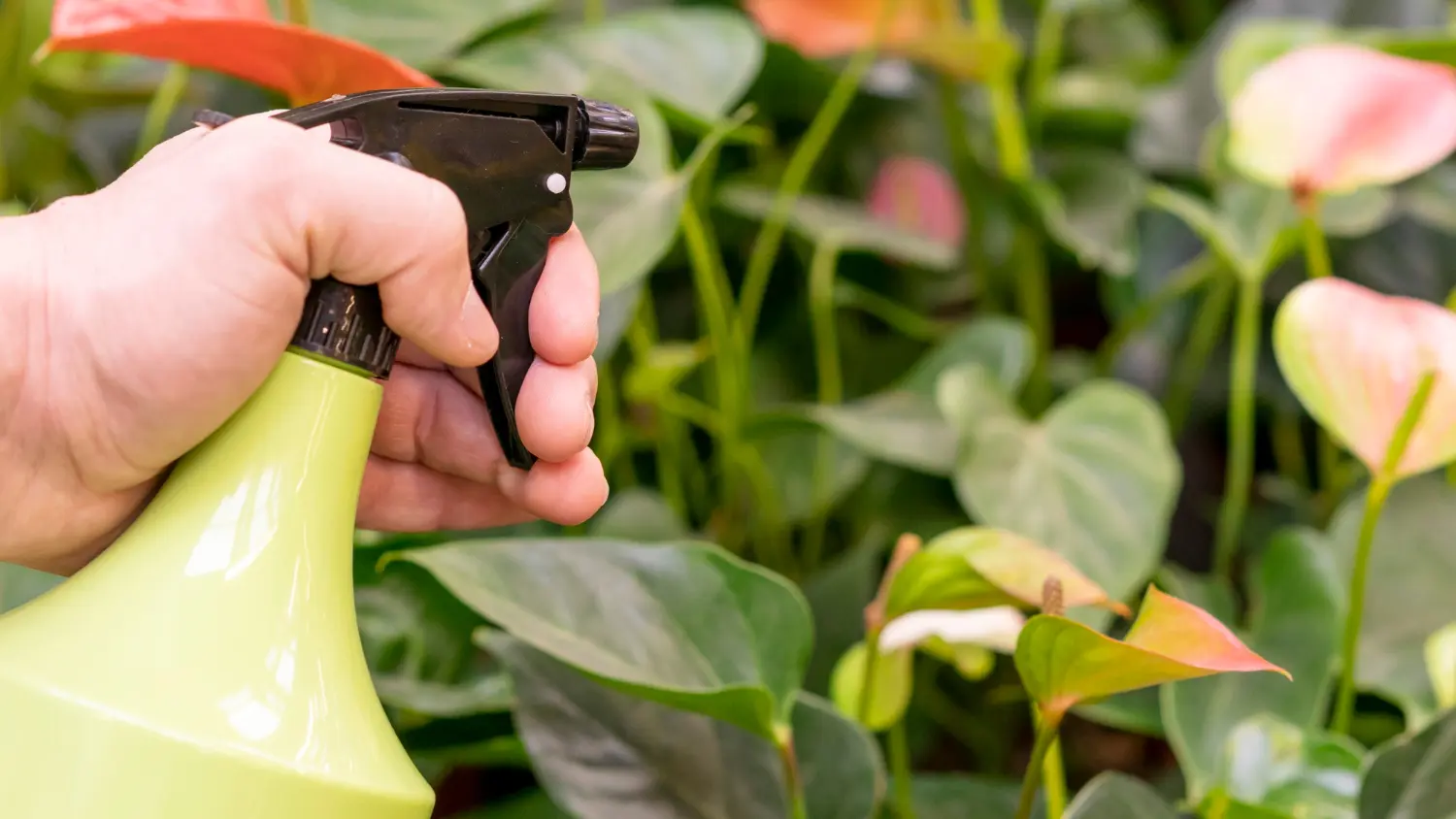
Foliar fertilizers are modern innovations that have revolutionized the world of plant nutrition, allowing farmers to deliver nutrients directly to plant leaves by spraying them with a nutrient solution. This method provides plants with the elements they need very rapidly, without waiting for roots to absorb them from the soil.
At Al-Qawafel, we notice that many farmers are unaware of the differences between the types of foliar fertilizers, purchasing products without knowing their actual crop needs. This comprehensive guide explains everything you need to know about foliar fertilizers, from their types and components to their mechanism of action, benefits, and application mistakes, with practical tips and the conclusion of 30 years of experience across fields in 40 countries.
Types of Foliar Fertilizers
Foliar fertilizers are divided into main groups that differ in their composition and effect. Choosing the appropriate type depends on the plant’s growth stage and its precise nutritional needs.
Balanced Fertilizers
Balanced foliar fertilizers contain close ratios of macronutrients NPK (Nitrogen, Phosphorus, Potassium), such as the 20-20-20 formula. This balance makes them suitable for covering plant needs across various vegetative and fruiting growth stages. These formulas promote the development of vegetative growth, stimulate root formation, and improve fruit quality, making them among the most widely used types of foliar fertilizers in daily agricultural practices.
When to use them?
- In the active growth stage
- For general maintenance throughout the season
- For crops that need balanced nutrition.
Micronutrient Fertilizers
Micronutrient fertilizers focus on supplying the plant with essential minor elements such as iron, zinc, manganese, and copper. These fertilizers are used to treat nutrient deficiencies that cause leaf yellowing (iron deficiency) or weak growth (zinc deficiency). They also contribute to activating vital enzymes within plant cells and accelerating photosynthesis processes. The most important micronutrients in them:
- Iron (Fe): Essential for chlorophyll formation and electron transport
- Zinc (Zn): Enters the composition of growth-regulating enzymes
- Manganese (Mn): Contributes to oxidation and reduction processes
- Copper (Cu): Participates in the formation of enzymes and proteins
- Boron (B): Regulates calcium absorption and affects flowering
- Molybdenum (Mo): Necessary for activating nitrogen enzymes.
Fertilizers Rich in Amino Acids
Certain types of foliar fertilizers rich in amino acids serve as an effective support for the plant during environmental stress such as drought, extreme heat, or cold. Amino acids help to:
- Activate the physiological growth of the plant
- Accelerate the process of flowering and fruit formation
- Enhance plant resistance to climatic stresses
- Improve the plant’s ability to recover and grow healthily.
These fertilizers are used during the phenological transition periods of the plant, such as the stage of transition from vegetative growth to flowering.
Seaweed Extracts
Natural products rich in plant hormones (such as cytokinins, auxins, and gibberellins), amino acids, and nutrients. They work to enhance plant strength and resistance to stress thanks to containing natural growth compounds. Their benefits:
- Improving root and vegetative growth
- Increasing plant resistance to environmental stresses
- Improving fruit quality and increasing productivity
- Activating beneficial microorganisms in the soil.
Components of High-Quality Foliar Fertilizers
Foliar fertilizers consist of a balanced mixture of nutrients that are dissolved in water to feed plants directly through the leaves.
Macronutrients
Macronutrients are the backbone of any foliar fertilizer, known as NPK components, the most important of which are:
- Nitrogen (N): Promotes vegetative growth, increases leaf density and greenness
- Phosphorus (P): Develops roots, stimulates flowering and fruit setting
- Potassium (K): Improves fruit quality and size, strengthens plant resistance to stress.
Secondary and Micronutrients
In addition to macronutrients, good types of foliar fertilizers contain secondary and minor elements that support precise vital functions:
- Magnesium (~1%): Chlorophyll formation and photosynthesis
- Calcium (Variable): Strengthening cell walls
- Sulfur (Variable): Formation of amino acids and proteins
- Iron (~0.6%): Electron transport in respiration and photosynthesis
- Zinc (~0.4%): Formation of growth-regulating enzymes
- Manganese (~0.8%): Oxidation and reduction processes
- Copper (~0.5%): Formation of enzymes and proteins
- Boron (~0.2%): Regulating calcium absorption and flowering
Adjuvants and Spreading Agents
These are additional ingredients added to foliar fertilizers to improve their effectiveness, including:
- Spreading agents: Reduce surface tension, helping the solution spread over the leaf surface
- Stickers: Increase the adhesion of the solution to the leaf surface to reduce loss by dripping
- Chelating agents: Protect micronutrients from reacting with other compounds and facilitate their absorption.
Absorption Mechanism: How does the plant absorb foliar fertilizer?
Leaves absorb nutrients through precise pathways within the leaf tissue, allowing the elements to quickly reach the target cells.
The Role of Stomata
Stomata are the main gateways that allow dissolved compounds to enter the leaf. In addition, epidermal cells adjacent to the veins contribute to the absorption of micronutrients due to their proximity to the vascular tissues. Absorption can also occur through tiny cracks or wounds that may form on the leaf surface, enhancing faster entry of elements.
Speed of Effect Compared to Soil Fertilization
Foliar fertilization is characterized by its extremely rapid effect compared to soil fertilization, as elements reach leaf tissues directly without passing through the roots or soil. This direct pathway makes the plant benefit immediately from nutrients, especially in cases of severe deficiency of micronutrients like iron and zinc, where improvement in growth and color appears within a short period after spraying.
Benefits of Using Foliar Fertilizers for Crops
Foliar fertilizers are fast and effective means of nourishing plants, achieving tangible results in a short time, especially during periods of stress or when nutrient deficiency symptoms appear. They achieve:
Improving Growth and Fruiting
Various types of foliar fertilizers contribute to enhancing vegetative growth, flowering, and fruiting, thanks to their ability to provide necessary nutrients quickly. They stimulate the flowering process and increase fruit setting and quality in terms of size and taste. Research shows that when foliar fertilization is performed in addition to soil fertilizers, an increase in productivity ranging between 12% and 25% is achieved in crops.
Treating Acute Nutrient Deficiency
Foliar fertilizers are the ideal solution to treat nutrient deficiency cases that suddenly appear on plants in the form of yellowing or curling of leaves. When iron, zinc, or magnesium deficiency is evident on the leaves, foliar spraying with chelated elements gives rapid results within days, whereas soil fertilization may take weeks to give the same effect.
Reducing Soil Losses and Fixation
Many soil types suffer from the problem of nutrient fixation, where elements react with the soil and become unabsorbable. In alkaline soils, iron turns into an insoluble form. In sandy lands, elements are washed away quickly with irrigation water. Foliar fertilization completely bypasses these problems because the elements reach the plant directly without passing through the soil. However, while foliar feeding is a great workaround, addressing the underlying ground conditions by understanding the causes of soil salinity and how to solve the problem remains essential for long-term land health.
Practical Application Guide: Timings and Spraying of Foliar Fertilizers
The Best Times to Spray Foliar Fertilizers
- Early morning: After sunrise, when stomata are open and humidity is high.
- After sunset: To avoid rapid evaporation and direct sunlight that may cause leaf burns.
- Avoid midday spraying: Intense heat causes the solution to evaporate quickly and increases the risk of burning leaves.
When is 20-20-20 fertilizer used?
20-20-20 fertilizer is a balanced foliar fertilizer containing equal proportions of the three macronutrients. It is used in the following cases:
- General maintenance: To feed plants throughout the season.
- Beginning of growth: To stimulate vegetative and root growth together.
- House and ornamental plants: To provide balanced nutrition in pots.
- Leafy crops: Such as lettuce and spinach.
Effect of Water pH
The pH of the mixing water greatly affects the effectiveness of foliar fertilizers. The optimal value is a pH between 5.5 and 6.5. When water is alkaline (high pH), some elements may precipitate and become unabsorbable. Tips for controlling pH:
- Use water free of chlorine and excess salts.
- Test water pH before mixing.
- Add acidic materials (such as phosphoric or citric acid) to adjust pH if necessary.
- Use chelated fertilizers to ensure nutrient absorption even under sub-optimal conditions.
Common Mistakes and Damages of Random Foliar Fertilization
Wise use of fertilizers achieves great benefits for the plant; conversely, incorrect use causes great damage.
Leaf Burn Phenomenon
Using a high concentration of foliar fertilizer may cause direct burning of leaf tissues. Burns appear as brown spots on leaf edges or between veins. For prevention:
- Commit to the recommended concentrations on the package.
- Test the solution on a small part of the plant before comprehensive spraying.
- Do not increase the concentration in hot conditions.
Spraying During Heat Stress
Spraying at midday or in high temperatures leads to:
- Rapid water evaporation, leaving salts concentrated on leaves causing burns.
- Limited absorption of elements due to stomata closure in extreme heat.
- Additional stress on the plant.
Wrong Fertilizer Mixing
Mixing foliar fertilizers with each other or with pesticides without knowing compatibility may lead to:
- Precipitation of elements and loss of their effectiveness.
- Chemical reactions harmful to the plant.
- Clogging of sprayer nozzles.
Difference between DAP and NPK
Many farmers confuse DAP fertilizer (diammonium phosphate) and compound NPK fertilizer:
- Content: DAP has 18% Nitrogen, 46% Phosphorus. Compound NPK has variable ratios of NPK.
- Use: DAP is for basic soil fertilization, root stimulation. Compound NPK is for diverse foliar or soil fertilization.
- Solubility: DAP partially dissolves in water. Compound NPK completely dissolves (for good foliar fertilizers).
- Suitable for: DAP is for soils poor in phosphorus. Compound NPK is for balanced nutrition or according to growth stage.
FAQ
What is the best foliar fertilizer?
There is no single ideal foliar fertilizer for all cases; the choice depends on the crop (leafy needs nitrogen, fruiting needs phosphorus and potassium), growth stage (vegetative needs balance, flowering needs higher phosphorus), soil condition (alkaline needs chelated elements), and the type of deficiency appearing on the plant. At Al-Qawafel, we offer a free consultation to determine what suits you best.
What are five types of fertilizers?
The top five main types of agricultural fertilizers:
- Balanced NPK fertilizers: Contain close ratios of nitrogen, phosphorus, and potassium (such as 20-20-20).
- Micronutrient fertilizers: Focus on chelated iron, zinc, manganese, and copper.
- Fertilizers rich in amino acids: Support the plant under environmental stress conditions.
- Seaweed extracts: Natural products rich in hormones and nutrients.
- Liquid organic fertilizers: Derived from natural sources like fermented manure and compost.
Does spraying amino acids on leaves cause fungi?
Amino acids by themselves do not cause fungi, but repeated spraying increases humidity around the plant, creating a suitable environment for their growth, especially with an original infection or high humidity; for prevention, it is preferred to add a preventive fungicide with the mixture in humid conditions.
 English
  العربية
  Español
  Français
  简体中文
简体中文  Português
  Português do Brasil
  Русский
  Deutsch
  Türkçe